More Than Just Light: How Modern Camping Lamps Are Redefining Your Sense of Safety in the Wilderness
In the field of outdoor lighting, we are witnessing a shift from “basic models” to “smart models.” Ten years ago, the key metrics for a camping lantern were lumen output and battery life; today, the industry’s focus has shifted to light quality and adaptability to different scenarios.
1. Color Temperature Adjustment: From “Cool White Interrogation” to “Warm Yellow Cozy Nook”
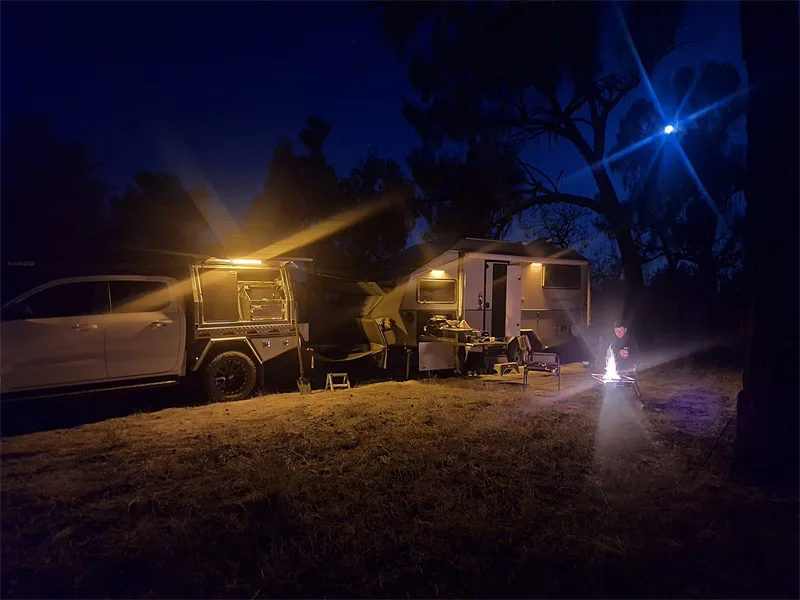
Modern high-end camping lanterns are generally equipped with dual-color-temperature or stepless dimming technology. When concentrated attention is needed for gear maintenance or map reading, neutral white light in the 4000K–5000K range enhances visual acuity; whereas during rest or meals at camp, switching to warm yellow light in the 2700K–3000K range not only reduces the attraction of mosquitoes but also simulates the ambiance of a campfire, alleviating the psychological tension caused by the wilderness environment.
2. Red Light Mode: “Invisibility” Under the Cover of Night
This is one of the features outdoor adventurers rely on most. Red light has a longer wavelength, offering weaker penetration at night and causing less disturbance to wildlife, while maximizing the human eye’s night vision capabilities. When you step out of your tent late at night to observe the stars or wait for nocturnal animals, a red-light camping lantern is a safer and more professional choice than white light.
3. Energy Strategy: From “Power Consumption” to “Power Storage”
Industry trends are shifting toward designing camping lanterns as “energy hubs.” Lanterns equipped with high-capacity built-in batteries not only support direct charging via solar panels but also feature reverse charging capabilities (Power Bank mode). This means that in the event of extreme weather or if you get lost, your camping lantern serves as the last line of defense for powering your satellite phone or GPS device.
Choosing the right camping lantern is, in essence, choosing a strategy for navigating the wilderness. It must not only pierce the darkness but also understand how to maintain the delicate balance between humans and nature in the dark.